What Transfers When You Buy a Pacific Beach Condo With Short-Term Rental History
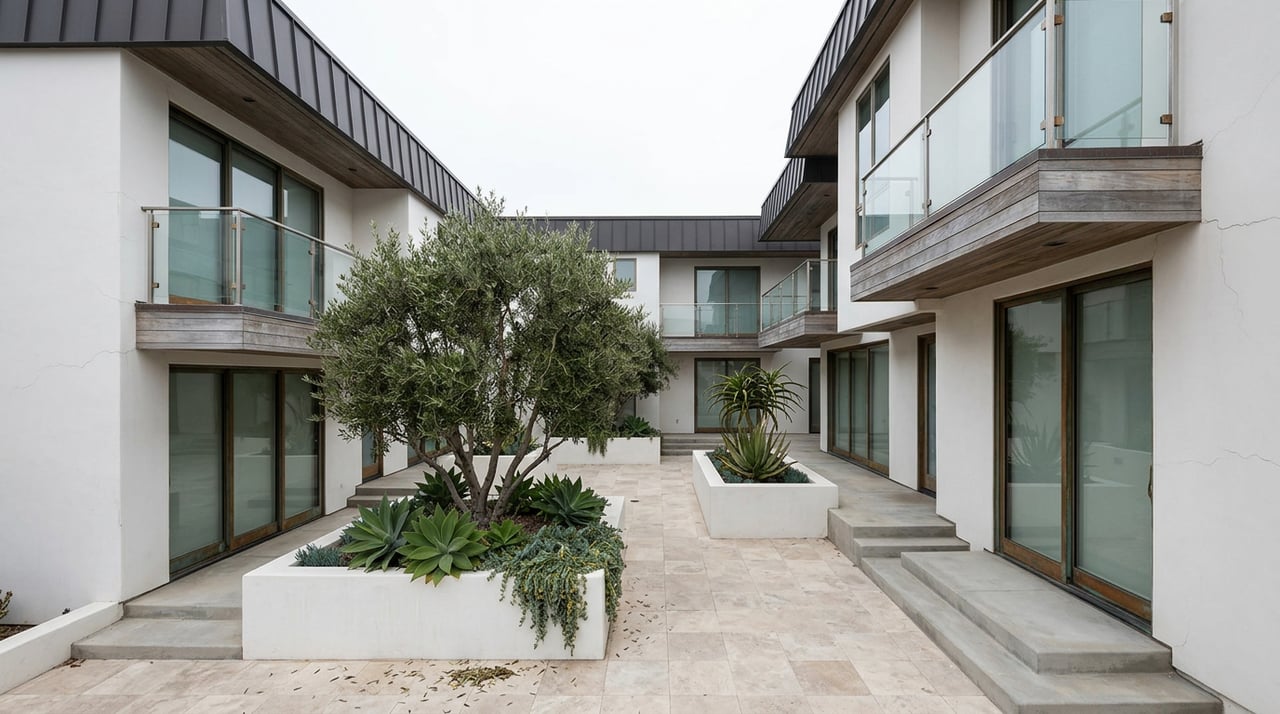
You're touring a two-bedroom condo three blocks off Garnet Avenue. The listing sheet has a trailing-twelve-month revenue number on it, a screenshot of last summer's Airbnb calendar, maybe a line about "STRO license in place." The seller's agent talks about the property the way you'd talk about a business you're acquiring, cash flow and occupancy and average daily rate. It feels like the rental income is a fixture of the unit, something that comes with the walls and the parking spot.
It isn't. And the gap between what that listing implies and what actually transfers at closing is the single most consequential thing to understand before you write an offer on a Pacific Beach investment condo in 2026.
San Diego regulates short-term rentals through its Short-Term Residential Occupancy ordinance, and the city's own treasurer page is direct about what happens at a sale: a host may hold only one license at a time, and licenses are not transferrable between ownership or from one dwelling unit to another. That sentence has appeared on the city's STRO page since the ordinance took effect, and it was still there as of the most recent update on September 11, 2026.
In plain terms, when the seller of that condo hands you the keys, the STRO license does not come with them. If you want to run the unit as a nightly or weekly rental the way the seller did, you apply for your own license, from scratch, into whatever pool is open the day you apply.
For Pacific Beach, that pool is Tier 3, the category for whole-home rentals outside Mission Beach. According to Truvi, it is capped citywide at roughly one percent of San Diego's housing stock, which works out to about 5,400 licenses total across the entire city, not just the coast. As of April 2026, the city's own count showed 880 Tier 3 licenses remaining against that cap. Trackers following the program through the middle of the year kept describing the same pool as under 900, with the number moving in one direction as renewals, new applications, and relinquishments worked through the system. There is no published date for when Tier 3 hits zero. There's only a trend, and it points toward scarcity, not availability.
If you're wondering why this matters more here than in, say, Carlsbad or Encinitas, look at where the existing licenses actually sit. An analysis of the city's open STRO dataset found that ZIP code 92109, which covers Pacific Beach and Mission Beach, accounts for roughly 30 percent of all active short-term rental licenses in San Diego, by far the heaviest concentration of any ZIP in the city.
That concentration cuts two ways for a buyer. It means there are more existing licensed properties on the market here than almost anywhere else, which is exactly why so many PB listings lean on rental income in their marketing. It also means this neighborhood is the one where the citywide cap actually bites. A capped resource that's already this saturated in one ZIP code is not a resource with much room left for a new entrant.
Mission Beach makes the point even sharper. According to Steadily, whole-home rentals there fall under a separate category, Tier 4, capped at 30 percent of Mission Beach's own housing stock rather than the citywide one percent. According to West Coast Home Stays, that waitlist sat closed for most of 2025 and into 2026, reopened briefly for six weeks over the summer. If you're comparing a Pacific Beach address against one a few blocks away that happens to sit inside the Mission Beach community planning boundary, you are comparing two entirely different licensing systems, not two flavors of the same beach town.
Getting past the city's cap is only half the problem. Most condo buildings in Pacific Beach carry their own rental restrictions written into the CC&Rs, and it's common for those documents to set a minimum stay regardless of what the city's STRO ordinance would otherwise allow. A building's covenants can override municipal permission entirely. A seller might hold a perfectly valid, active Tier 3 license and still be renting in violation of their own HOA's rules, which is not a status you want to inherit sight unseen.
This is worth checking before you fall in love with a unit, not after your offer is accepted. Ask for the building's current CC&Rs and any HOA meeting minutes that touch on short-term rental policy, separate from whatever the listing says about the city license.
| Transfers with the deed | Does not transfer |
|---|---|
| The unit itself, parking, storage | The seller's STRO license |
| Existing furnishings, if negotiated | |
| Booking platform reviews tied to the address (not the account) | Any right to operate under the seller's license number |
Your own version of that business depends entirely on whether you can get a license of your own, and right now that is not guaranteed for a Tier 3 property in Pacific Beach.
Even for owners who do hold valid licenses, the margin for error narrowed this year. Under California SB 346, effective January 2026, booking platforms are required to share host and listing data directly with the city, and unlicensed operators face fines starting at $1,000 per day. The old strategy of listing quietly and hoping nobody checked stopped being viable once city enforcement started cross-referencing platform data against the license database automatically.
There's also a use-it-or-lose-it clause built into the ordinance itself. Tier 3 and Tier 4 hosts have to rent the dwelling for a minimum of 90 days a year to keep the license. A buyer imagining light personal use plus occasional rental income needs to check that math before assuming the property fits.
None of this means Pacific Beach is a bad place to buy an investment condo. The walkability, the beach proximity, and the year-round rental demand are real, and none of that changes based on a license number. What changes is how you should be pricing the property in front of you. A condo with an active, transferable-in-spirit-only license and a clean compliance history is a different asset than an identical unit without one, even if the two look the same in photos and carry the same asking price.
Can I use the property as a part-time rental if I can't get a Tier 3 license? Possibly, under Tier 2, which covers a primary residence occupied at least 275 days a year with up to 70 days of whole-home short-term use allowed. That path requires you to actually live in the unit most of the year, which rules it out as a pure investment purchase.
Does a 31-night-plus rental avoid the licensing issue altogether? Yes. Rentals of 31 consecutive nights or longer fall outside the STRO ordinance entirely and don't require a license, though they're still subject to standard landlord-tenant law.
If you're weighing a Pacific Beach condo against other coastal options and want a straight read on what a specific address's license status actually looks like before you write an offer, Kara Kay can walk the numbers with you against the current market. Request a Home Valuation to start the conversation.
This article is general information, not legal, tax or financial advice. Consult a qualified professional about your situation.

Kara Kay
Kara Kay is a top producer in the greater La Jolla area, known for her professionalism, efficiency, and local expertise. A San Diego native with a degree in Public Relations and Marketing, Kara's career includes being a San Diego Charger Girl and a finalist on CBS's Survivor. Her dedication to her clients, attention to detail, and commitment to seamless transactions have earned her a stellar reputation in San Diego real estate.
Stay up to date on the latest real estate trends.

Fun for Every Age: Top Activities in Pacific Beach for Multiple Generations.

Understanding a Seller's Market and a Buyer's Market in Pacific Beach Real Estate.

What Rising Interest Rates Mean for Buyers in the Pacific Beach Market.

Your Local Guide to the Best Nightlife in Pacific Beach After the Sun Goes Down.

Smart Strategies for Building Equity in Your Pacific Beach Home Over Time.

What Every Buyer Should Know About HOA Fees in Pacific Beach Before Purchasing.
With our determination, attention to detail, and overall commitment to our clients, we ensure all transactions are handled seamlessly with care, honesty, and integrity. Let us guide you through your home buying journey.